Arts and Crafts
Strawberry Thief
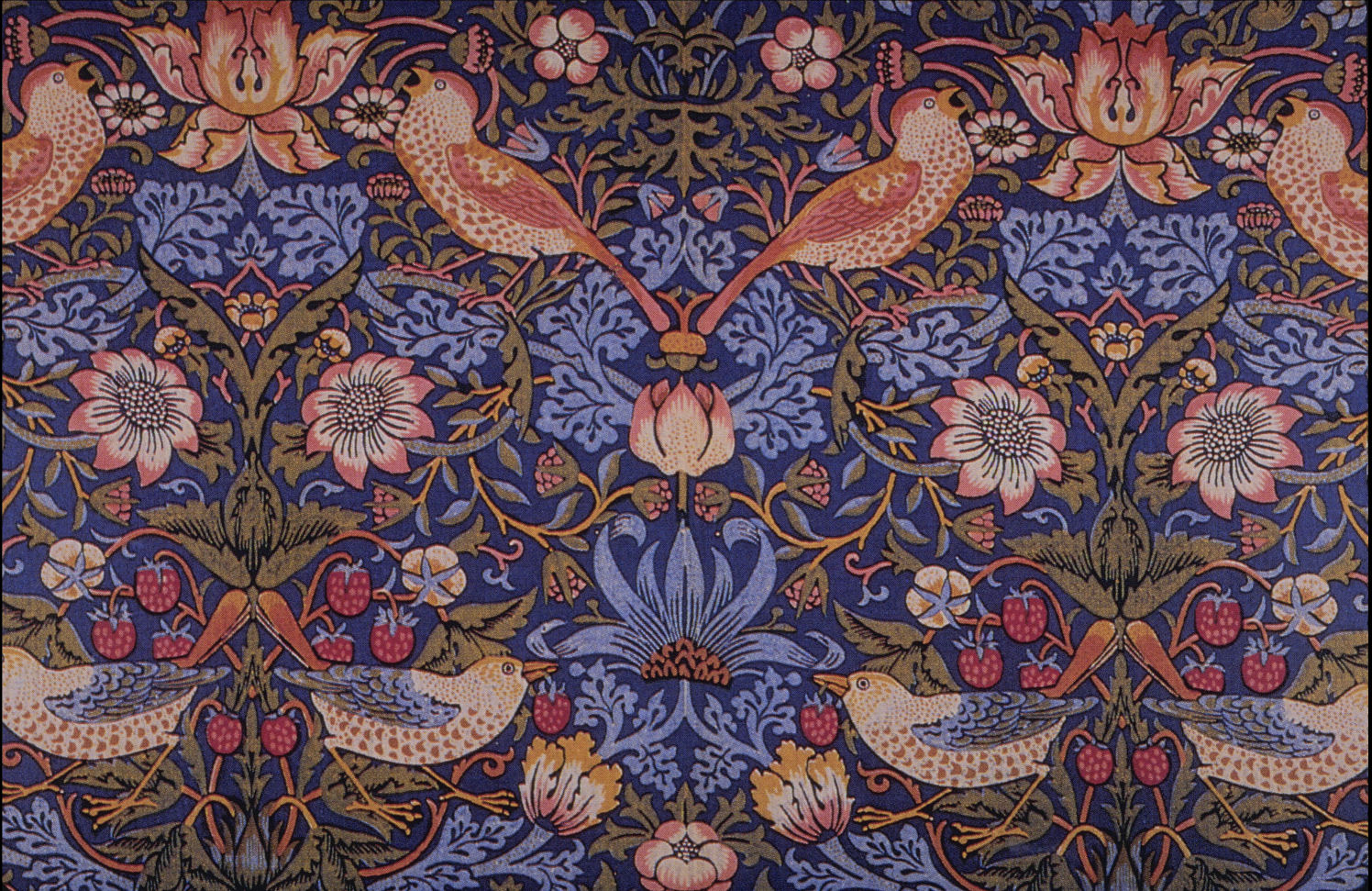
Birds steal strawberries among curling vines. Morris designs a pattern meant to live with you, turning everyday space into a garden of attention.
Pattern as environment
The design is dense but balanced. Birds, leaves, and strawberries weave into a rhythm that feels natural rather than mechanical.
Morris wanted pattern to be lived with, to make daily life more beautiful without demanding constant attention.
Arts and Crafts intention
Morris rejected industrial sameness and celebrated handcraft. Strawberry Thief embodies that philosophy, turning decoration into a statement about care and labor.
The pattern feels alive because it is rooted in close observation of nature.
Making and materials
The textile was produced using indigo discharge printing, a complex technique that creates rich contrast. The craftsmanship is part of the aesthetic.
You can feel the designer's intention: not just to decorate, but to nurture a way of living.
Legacy
Strawberry Thief became one of Morris's most iconic patterns. It remains a touchstone for design that values beauty and integrity.
Its appeal is timeless because it makes daily spaces feel cared for.
Looking closer
The birds and strawberries are locked into a rhythmic repeat, but the pattern never feels rigid. The slight variations keep it alive.
Morris designed this for daily life. The intention is generosity: beauty that surrounds you quietly, not a luxury locked away.
It is art you can sit beside every day.