Insular art
Lindisfarne Gospels – Carpet Page
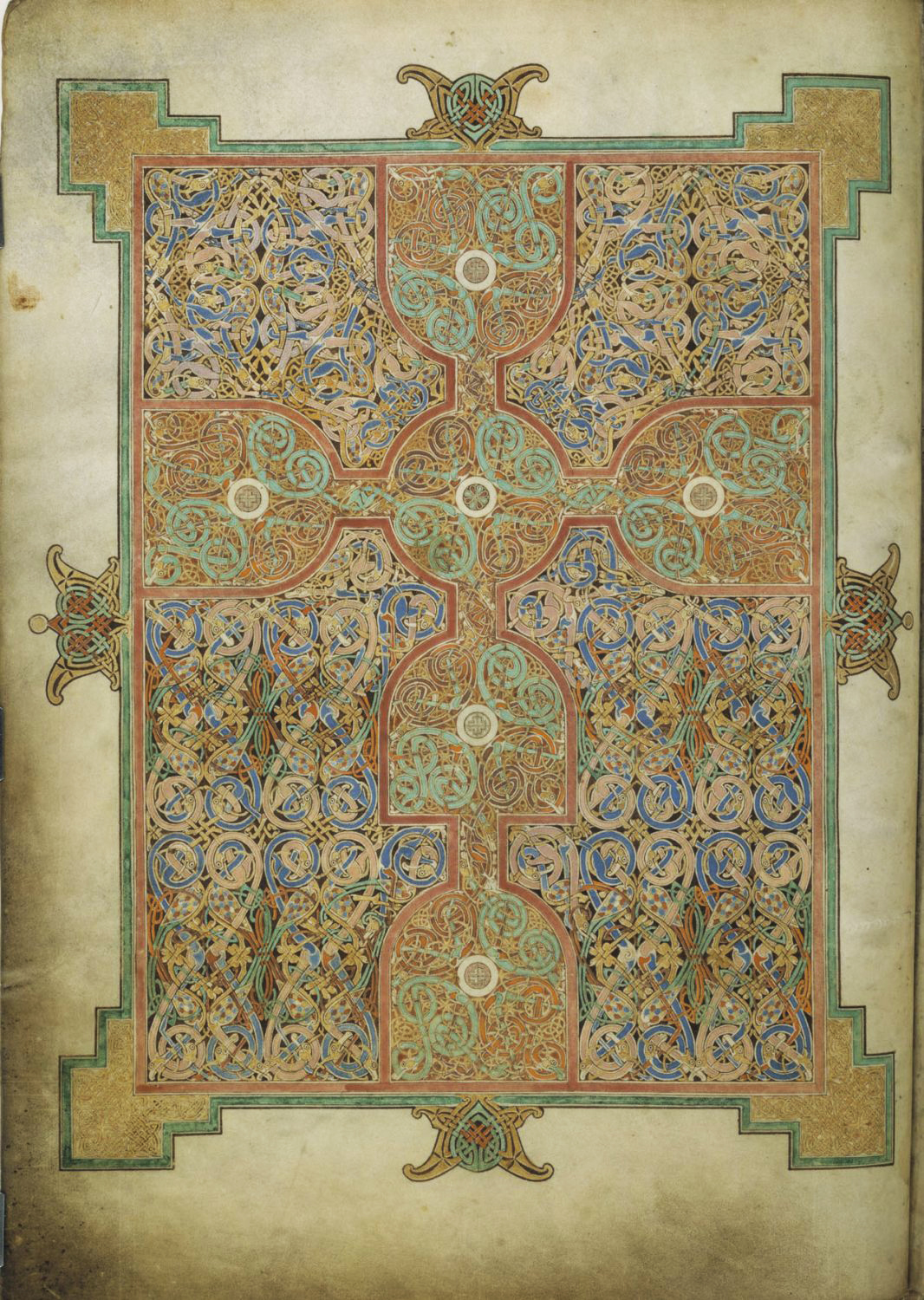
No figures, just a woven field of geometry. The page feels like a silent prayer, a visual space meant to prepare the mind.
Geometry as meditation
The page is a carpet of interlace, crosses, and knots. Your eye wanders, then settles, as if the design were guiding your breath.
There is no narrative here. The point is preparation, a visual pause before the sacred words begin.
Ritual function
Carpet pages appear at key points in the manuscript. They serve as visual thresholds, marking a transition into scripture.
The complexity of the pattern invites focus and patience, turning the act of looking into a quiet ritual.
Insular culture
The Lindisfarne Gospels blend Celtic knotwork with Christian symbolism. The style reflects a cultural meeting point at the edges of Europe.
This fusion gives the page its distinct energy: ancient patterns serving a new faith.
Legacy
Carpet pages have inspired modern graphic design and book art. Their power lies in pure structure and rhythm.
They remind us that meaning can be built from pattern alone.
Looking closer
The design is symmetric but not sterile. The interlacing lines have a pulse, like woven fabric or breath.
Because there are no figures, you focus on rhythm and balance. The page becomes a visual meditation before the text begins.
Stillness, built from pattern.