Romanesque
The Bayeux Tapestry (Scene Detail)
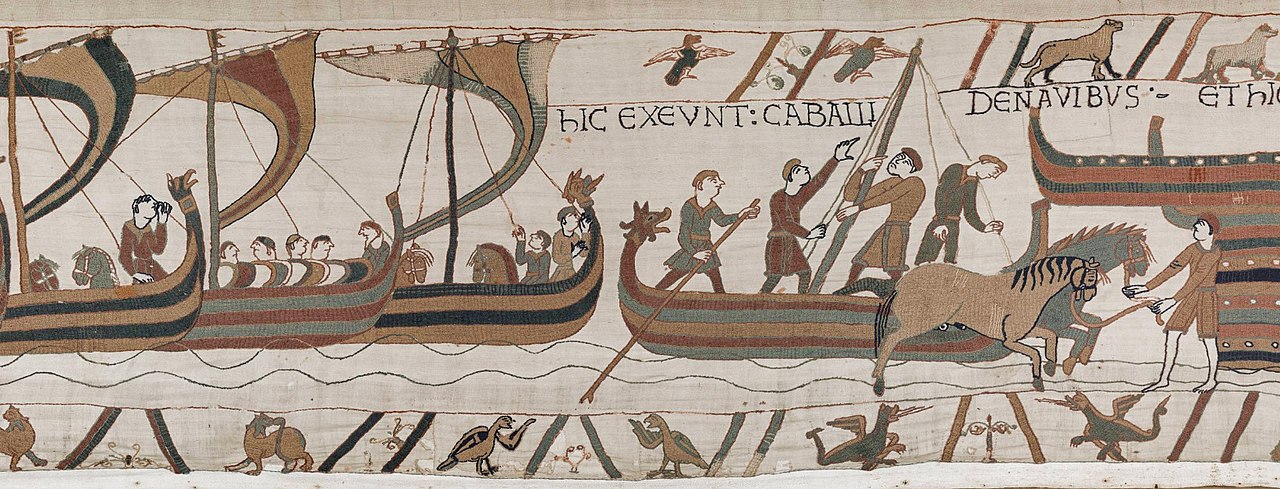
Like a medieval graphic novel, the tapestry marches on, stitch by stitch. The story moves forward in a long band, making history feel immediate and human.
Story in a long strip
The tapestry unfolds horizontally, scene after scene. There is no single focal point; the viewer follows the narrative like a moving procession.
This format makes the story feel alive, almost cinematic, centuries before film.
Materials and makers
The images are stitched in wool on linen, using simple but expressive outlines. The technique favors clarity and speed.
The making itself is part of the story: a workshop of skilled hands translating political history into visual form.
Norman conquest context
The tapestry narrates the events leading to the Norman conquest of England. It presents a version of history that legitimizes Norman rule.
That blend of storytelling and persuasion makes it one of the earliest large-scale visual histories in Europe.
Legacy
The Bayeux Tapestry remains a cultural treasure and a model for narrative art. Its influence can be seen in everything from comics to cinematic storyboards.
It endures because it makes history feel human, stitched into a long, tangible line.
Looking closer
The figures are outlined with clarity rather than depth, which keeps the story moving. The tapestry is more about narrative flow than illusion.
Borders often contain small scenes and motifs, like a second story running alongside the main one. It makes the tapestry feel rich and alive.
History here is something you can literally thread.