Early printing
Gutenberg Bible – Printed Page
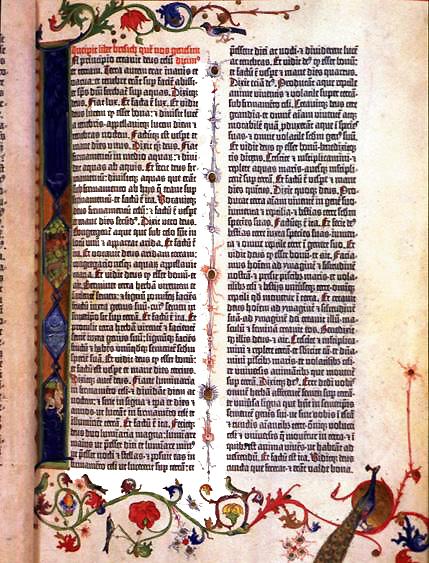
The text is crisp and regular, almost mechanical, yet hand-colored flourishes remind you of the human hand. This page is where the future of reading quietly begins.
A new kind of page
The uniform blackletter text is the result of movable type. Each line is consistent, giving the page a rhythm that feels both solemn and efficient.
At the same time, hand-painted initials and flourishes remind you that this was still a crafted object, bridging manuscript tradition and new technology.
Printing revolution
Gutenberg's press made books reproducible at scale. This page represents a shift from the slow labor of copying to the faster spread of ideas.
The intention was both practical and cultural: make knowledge more available without losing dignity.
Hybrid craftsmanship
Even in a printed Bible, the hand remained present. Scribes and illuminators still added color, decoration, and personality.
The page is a collaboration between machine-like precision and human artistry.
Legacy
The Gutenberg Bible is often called the book that changed the world. It set the standard for Western printing and typographic design.
This single page hints at the vast cultural transformation to come.
Looking closer
The text is set in dense, even columns, giving the page a steady beat. It feels ordered, like a new machine for thought.
Hand-painted initials soften the uniformity. That blend of print and hand makes the page feel both modern and human.
A page where the future of reading quietly begins.