Dutch Golden Age
The Hundred Guilder Print
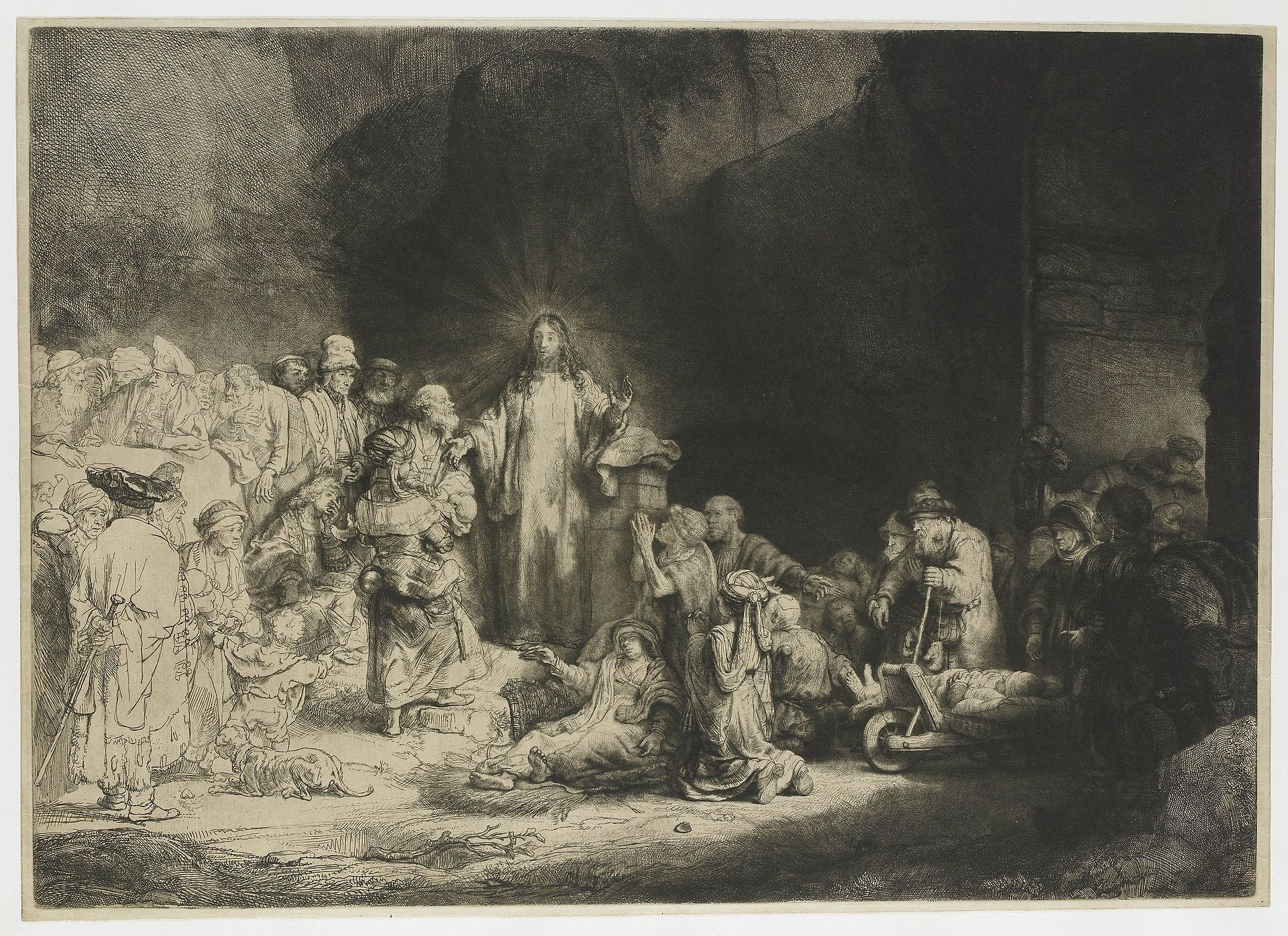
Christ stands at the center and the crowd leans in. Rembrandt uses light like mercy, drawing your eye to the people who need it most.
A crowd with a focal heart
Rembrandt gathers the crowd in a semicircle, with Christ as the quiet center. Each figure reacts differently: hope, fatigue, curiosity.
The composition feels compassionate. You can sense the artist inviting you to join the group, not just observe it.
Technique as light
Etching allows for crisp line, while drypoint adds velvety darkness. Rembrandt uses both to sculpt light directly onto the paper.
The transitions from light to shadow feel like a moral landscape, guiding you toward the figures who receive attention.
Religious and market context
Prints circulated widely in the Dutch Republic, bringing complex religious images into private homes. This work was prized enough to earn its nickname for its high price.
It bridges scripture and everyday life, making sacred narrative feel close and human.
Legacy
The Hundred Guilder Print is considered one of the great achievements of etching. It has influenced generations of printmakers.
Its power lies in empathy: the crowd feels like real people, not symbols.
Looking closer
Rembrandt gathers multiple moments into a single space, like a stage where different stories intersect. Your eye moves from group to group, finding small dramas within the crowd.
The light seems to fall where compassion is needed most. That choice makes the scene feel less like spectacle and more like care.
Grace in this image feels like a beam of light.