Romanticism
The Third of May 1808
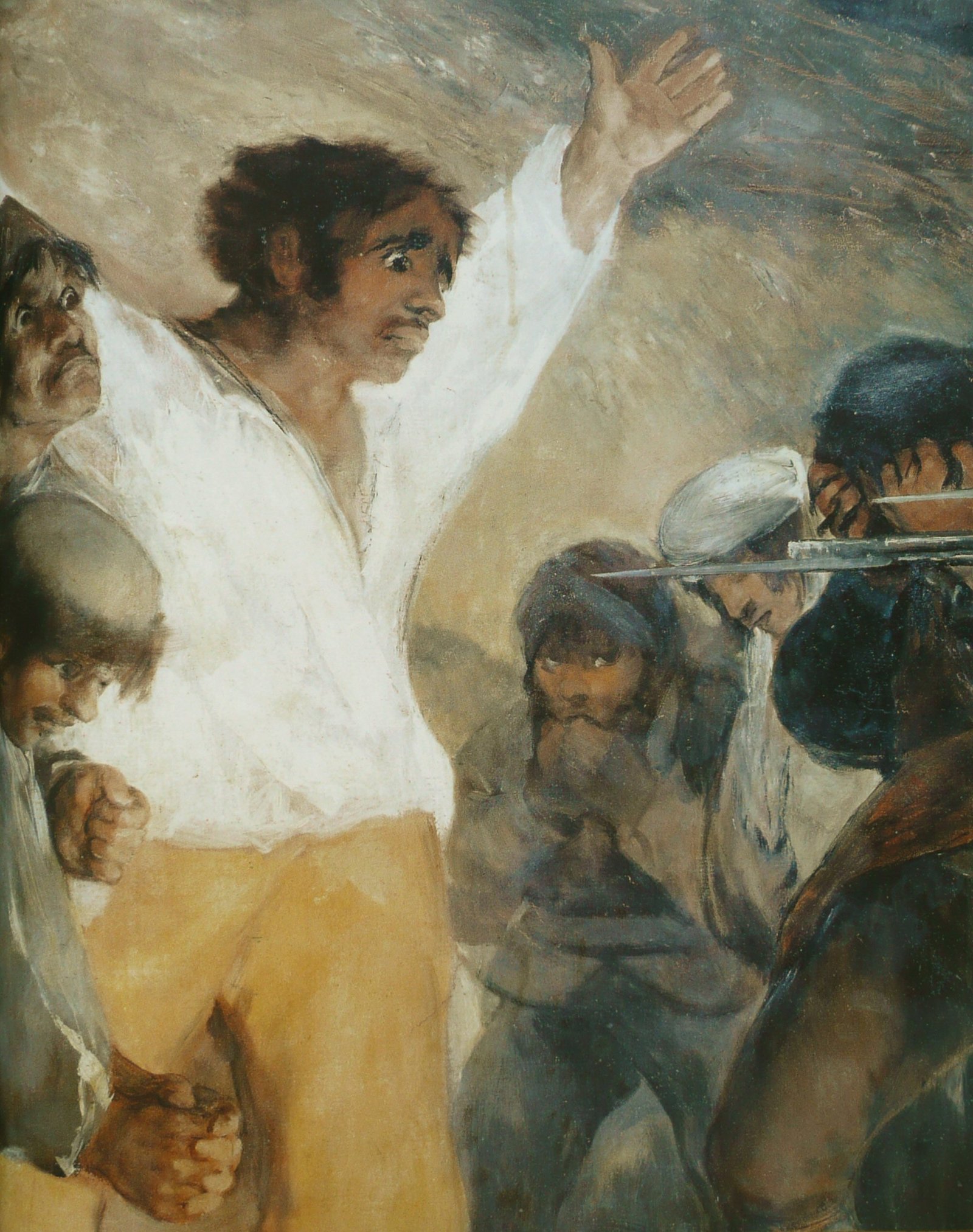
A night execution painted as a raw, human scream against oppression.
A night of terror
The scene takes place at night, where a firing squad executes Spanish civilians after the uprising against Napoleon's forces.
The darkness presses in, making the moment feel immediate and claustrophobic.
Light as moral spotlight
A lantern on the ground throws harsh light on the victims. It is a spotlight of truth, revealing faces twisted in fear and courage.
The soldiers are turned away from us, their backs forming a wall of anonymous power.
No heroic disguise
Goya does not soften the brutality. Blood stains the ground, bodies collapse, and the next man in line raises his arms in a gesture that echoes a crucifixion.
The painting refuses to glamorize violence. It mourns it.
A modern legacy
The Third of May 1808 became a foundational image of modern political art. It influenced later works that depict war as trauma rather than glory.
It remains one of the most direct visual indictments of state violence.
Looking closer
The man in white is painted like a beacon. His open arms are both surrender and defiance.
Notice how the ground tilts upward, pushing the crowd toward us and making the scene feel uncomfortably close.
Goya paints the moment when humanity meets the machine of violence.