Post-Impressionism
Sunflowers
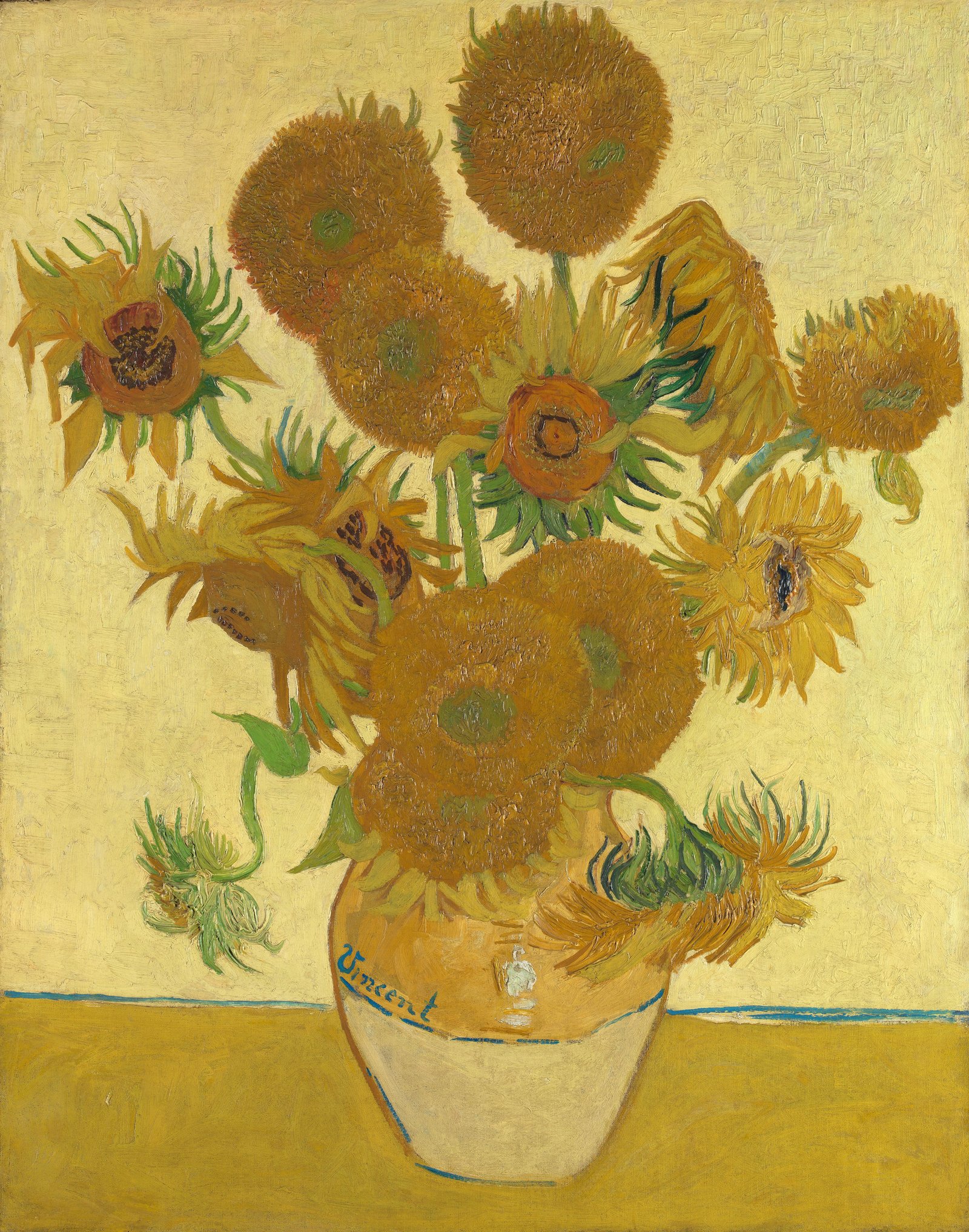
A bouquet painted as a study in warmth, time, and the beauty of impermanence.
A bouquet of time
Some blooms are fresh, others are wilting. Van Gogh paints the flowers not as decoration but as a cycle of life.
The vase and tabletop are simple, keeping the focus on the shifting states of the petals.
Yellow as atmosphere
Van Gogh builds the image with layers of yellow, from pale lemon to deep ochre. The color is not just hue; it is mood.
The background vibrates with brushwork, making the air feel warm and dense.
Friendship and intention
Van Gogh painted these sunflowers to decorate the room for Paul Gauguin's visit. The painting carries a sense of welcome and hope.
It is a still life, but it is also a personal message, a gift in paint.
A modern icon
The Sunflowers series became one of the most recognizable works in modern art, celebrated for its directness.
It shows that intensity can come from ordinary things when an artist paints with full attention.
Looking closer
The thick paint creates ridges that catch light, giving the flowers a physical presence.
Notice how the seeds are painted as tiny marks, like a field of stars inside each bloom.
Van Gogh makes a simple bouquet feel like a room full of sunlight.