Expressionism
The Scream
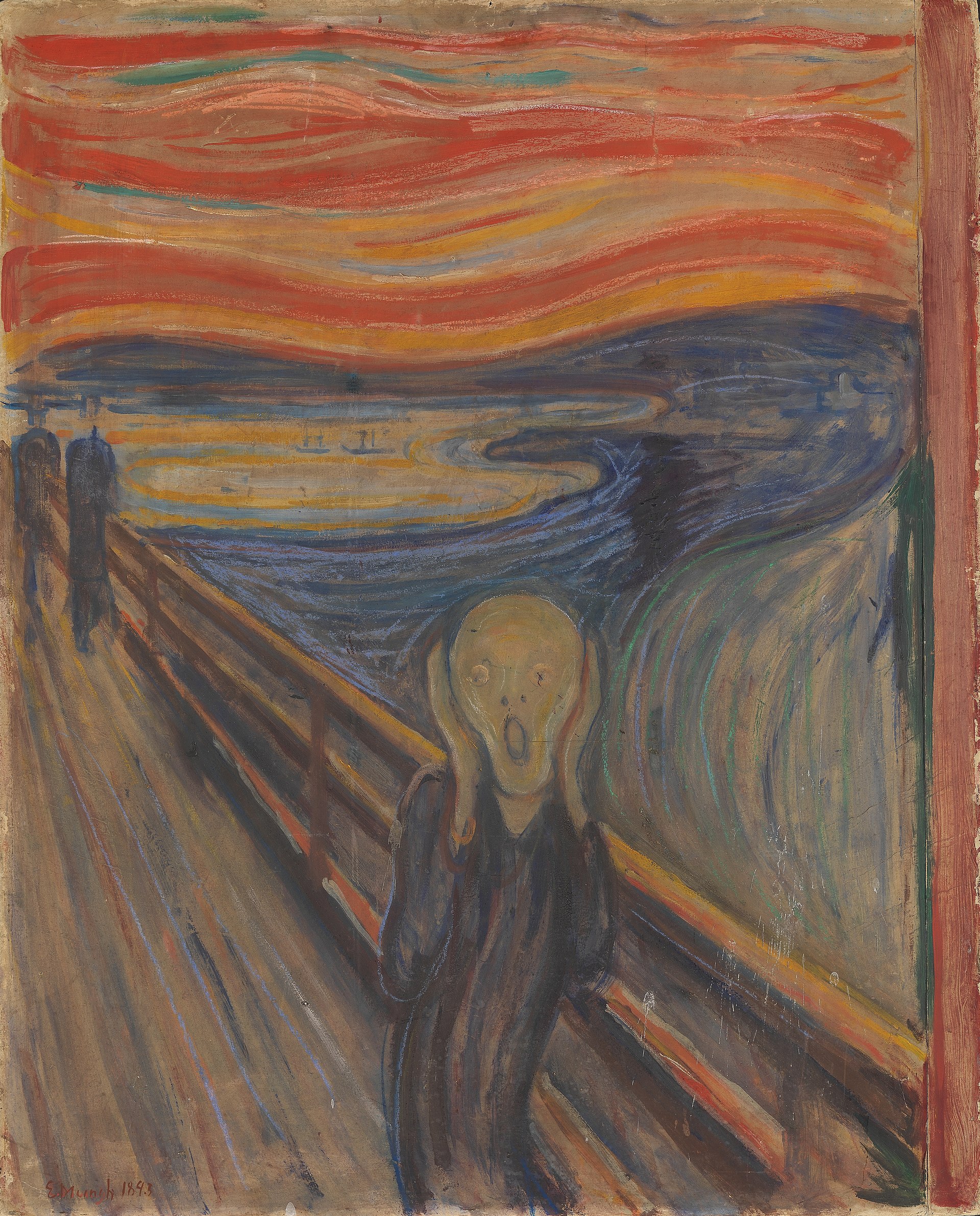
On a bridge at dusk, the sky ripples and the figure becomes the sound of anxiety. The painting does not just show a scream; it feels like one.
A figure that dissolves
The central figure is simplified into a mask, hands pressed to the face. The curves of the body repeat in the sky and water, making the landscape feel like an echo.
This merging of figure and world turns emotion into environment. You are not just watching someone scream; you are inside the scream.
Sound made visible
Munch described hearing a scream in nature. He transforms sound into color bands that vibrate against each other, orange against blue.
The bridge and distant figures remain calm, which makes the central cry feel even more isolated and raw.
Modern anxiety
The Scream emerges from a period of rapid change and personal turmoil. Munch turns that unease into a universal symbol.
Rather than telling a specific story, the image gives shape to a feeling many people recognize.
Legacy
The Scream has become shorthand for existential dread in modern culture. Its simplicity makes it endlessly adaptable.
What keeps it powerful is its honesty. It names a feeling without smoothing it out.
Looking closer
The railing of the bridge cuts diagonally across the scene, a rigid line that contrasts with the rippling curves of the sky. It heightens the sense of instability.
Two distant figures continue walking, indifferent. That small detail deepens the feeling of isolation, as if the scream is happening inside the figure alone.
The sky bends to the shape of fear.