Northern Renaissance
The Rhinoceros
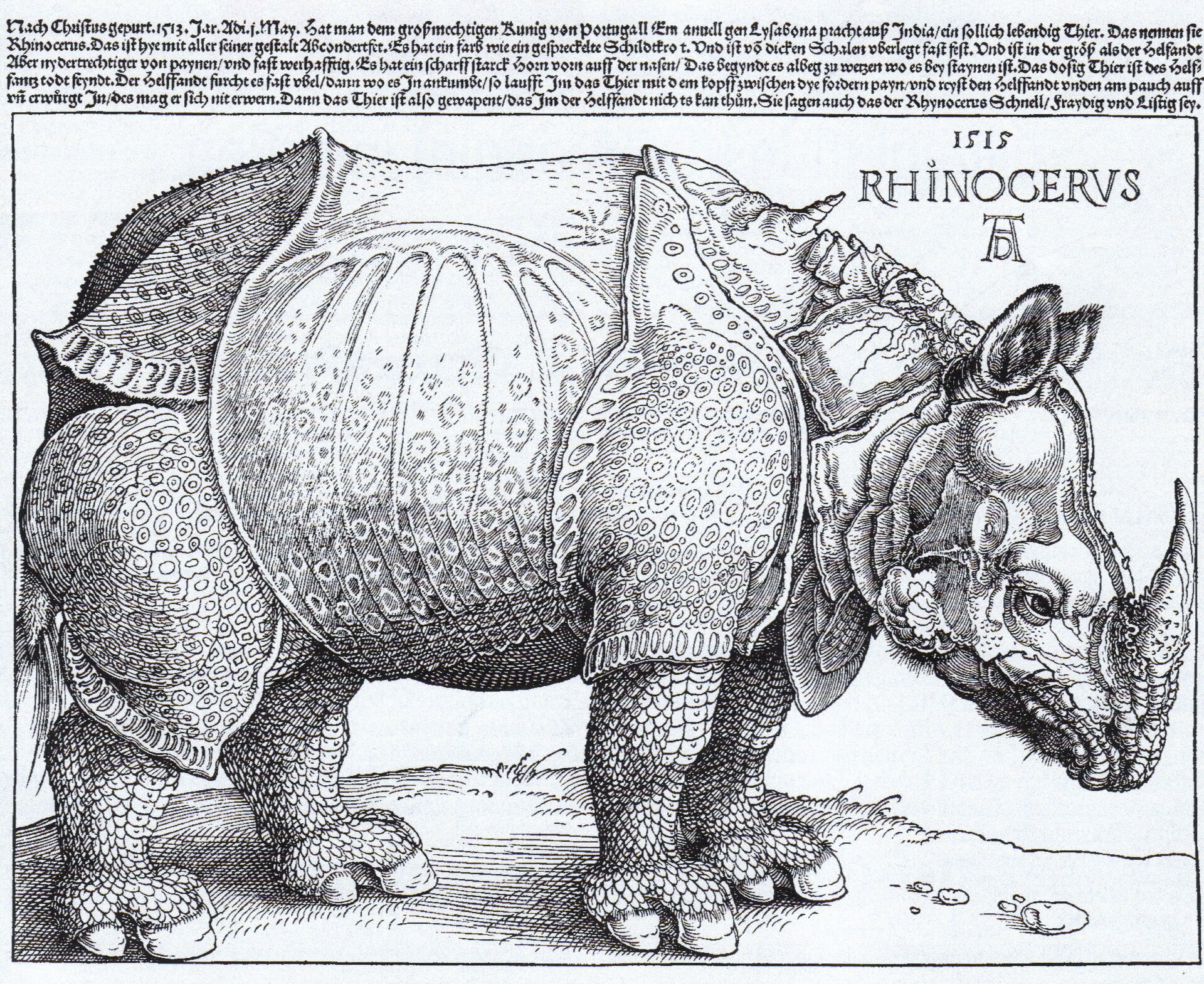
Dürer never saw a rhinoceros, yet he created one that Europe believed for centuries. It is imagination masquerading as fact, and it tells a story about how images spread.
An animal built from rumor
Dürer relied on written descriptions and a sketch from someone else. The result is a rhinoceros with armor-like plates and a small horn on its back.
It is not anatomically accurate, but it feels convincing. That sense of conviction is part of the print's power.
Prints as information
In the early sixteenth century, printed images were a fast way to share knowledge. Dürer’s woodcut became the standard European image of a rhinoceros.
The print shows how visual culture can shape what people believe, even when the source is incomplete.
Curiosity and power
Exotic animals were symbols of global reach and political power. The rhinoceros was a marvel, and the woodcut turned it into a collectible icon.
The image celebrates the excitement of discovery, even as it reveals the limits of knowledge.
Legacy
For centuries, Dürer’s rhinoceros was accepted as truth. It is now a reminder of how persuasive a single image can be.
The woodcut remains a classic example of the power and risk of visual information.
Looking closer
The animal looks armored, almost mechanical. Dürer’s imagination fills the gaps in knowledge with texture and pattern, making the creature feel both real and mythic.
The woodcut spreads this image quickly and widely, which is why it became accepted truth. It’s a reminder that images can create reality, not just record it.
A drawing that became 'true' because it traveled so far.