Dutch Golden Age
The Milkmaid
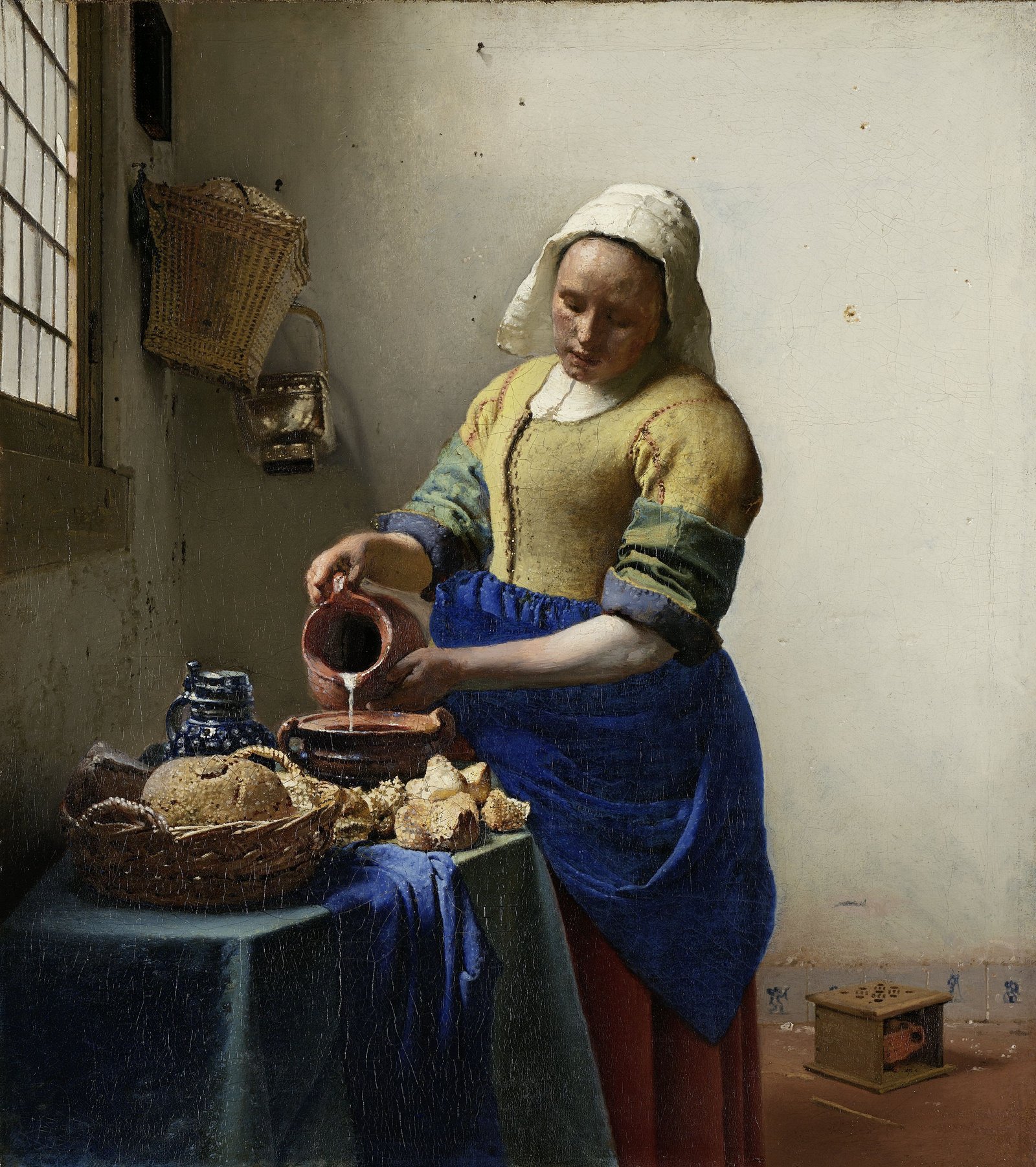
A quiet kitchen scene that turns domestic work into a study of light and care.
An everyday ritual
A woman pours milk into a bowl. It is a simple action, but Vermeer paints it as if time has slowed down to honor the moment.
The scene feels intimate and still, inviting the viewer into a private corner of daily life.
Light that shapes the room
Light enters from the window at left, touching the woman's face, hands, and the bread on the table. It turns ordinary objects into quiet focal points.
The wall behind her is not empty; it is a surface that catches light and makes the space feel tangible.
Dignity in labor
Vermeer avoids sentimentality. The woman is absorbed in her task, which gives her a quiet authority.
This attention to honest work reflects a Dutch culture that valued domestic virtue and practical skill.
Legacy of stillness
The Milkmaid has become a symbol of Vermeer's ability to turn small scenes into profound moments.
It reminds us that a painting can be powerful without grand drama, simply by making us look carefully.
Looking closer
Look at the tiny dots of light on the bread crust. Vermeer uses them like sparks, giving texture a sense of life.
The pouring milk is the only moving element, which makes the rest of the room feel even more still.
In Vermeer's hands, a kitchen becomes a sanctuary of attention.