High Renaissance
The School of Athens
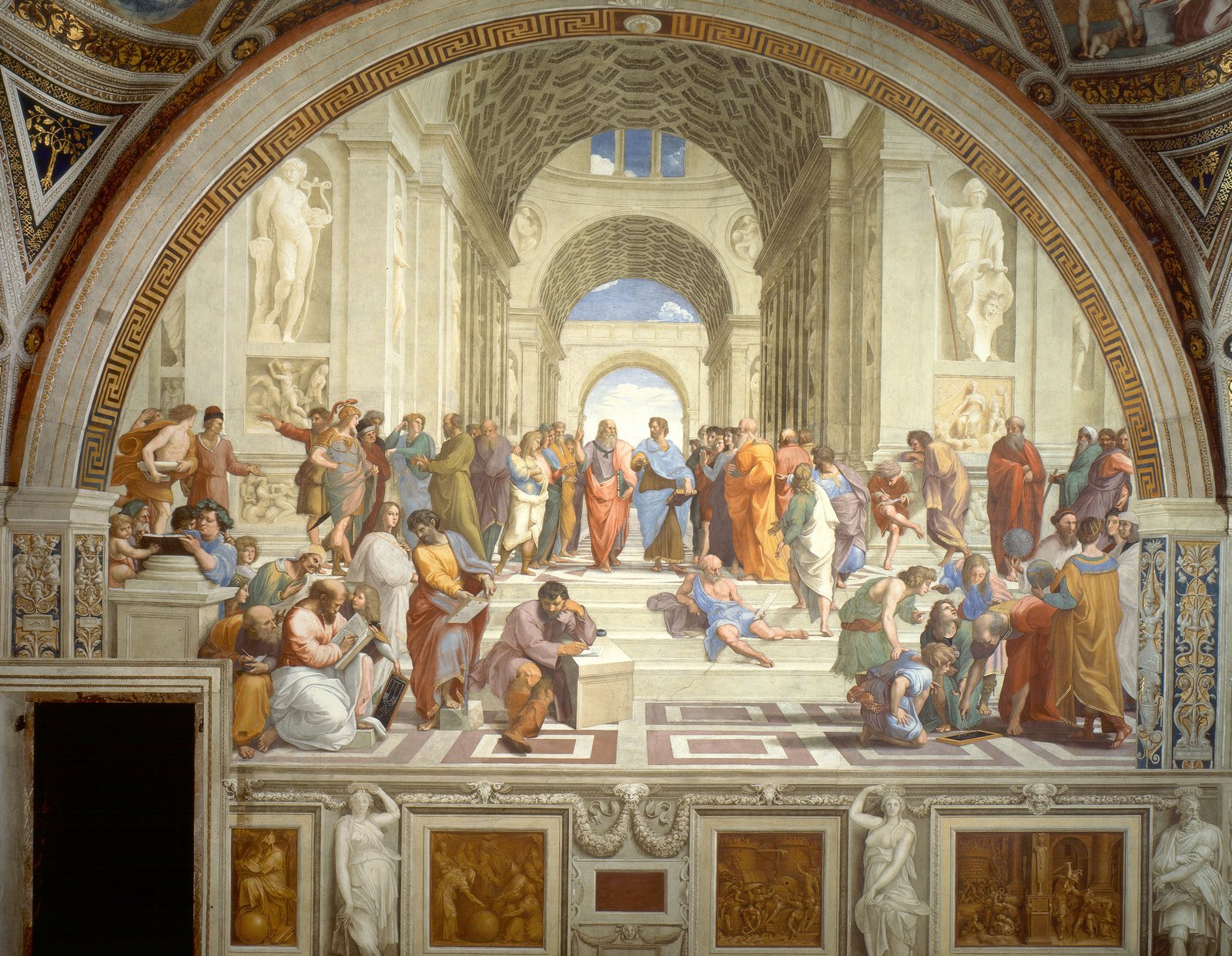
A grand gathering of philosophers that stages knowledge as a living conversation.
A theater of ideas
Raphael imagines philosophy as a gathering of people in motion, not a list of names. The scene is full of small conversations, disagreements, and moments of study.
The space feels like a stage, with steps and arches guiding you inward. It is a visual argument that ideas are built together, in community.
Plato and Aristotle at the center
At the middle, Plato points upward while Aristotle gestures to the earth. One implies a world of ideals; the other insists on observation and experience.
Raphael does not pick a side. He lets the tension stand, making the debate itself the heart of the picture.
Humanism in fresco
Painted in the pope's library, this fresco belongs to the Renaissance belief that classical thought and Christian faith could speak to each other.
The figures include portraits of Renaissance artists as philosophers, quietly placing contemporary creativity alongside ancient wisdom.
A legacy of scale
The painting became an emblem of the High Renaissance ideal: clarity, balance, and intellectual ambition.
Even when you do not recognize every figure, the composition makes the act of thinking feel monumental.
Looking closer
The staircase splits the crowd, inviting you to step in and join the conversation.
Look for the diagonal line of gestures and gazes; they weave a network of attention across the wall.
Raphael makes philosophy feel like a room you can walk into.