Ukiyo-e
The Great Wave off Kanagawa
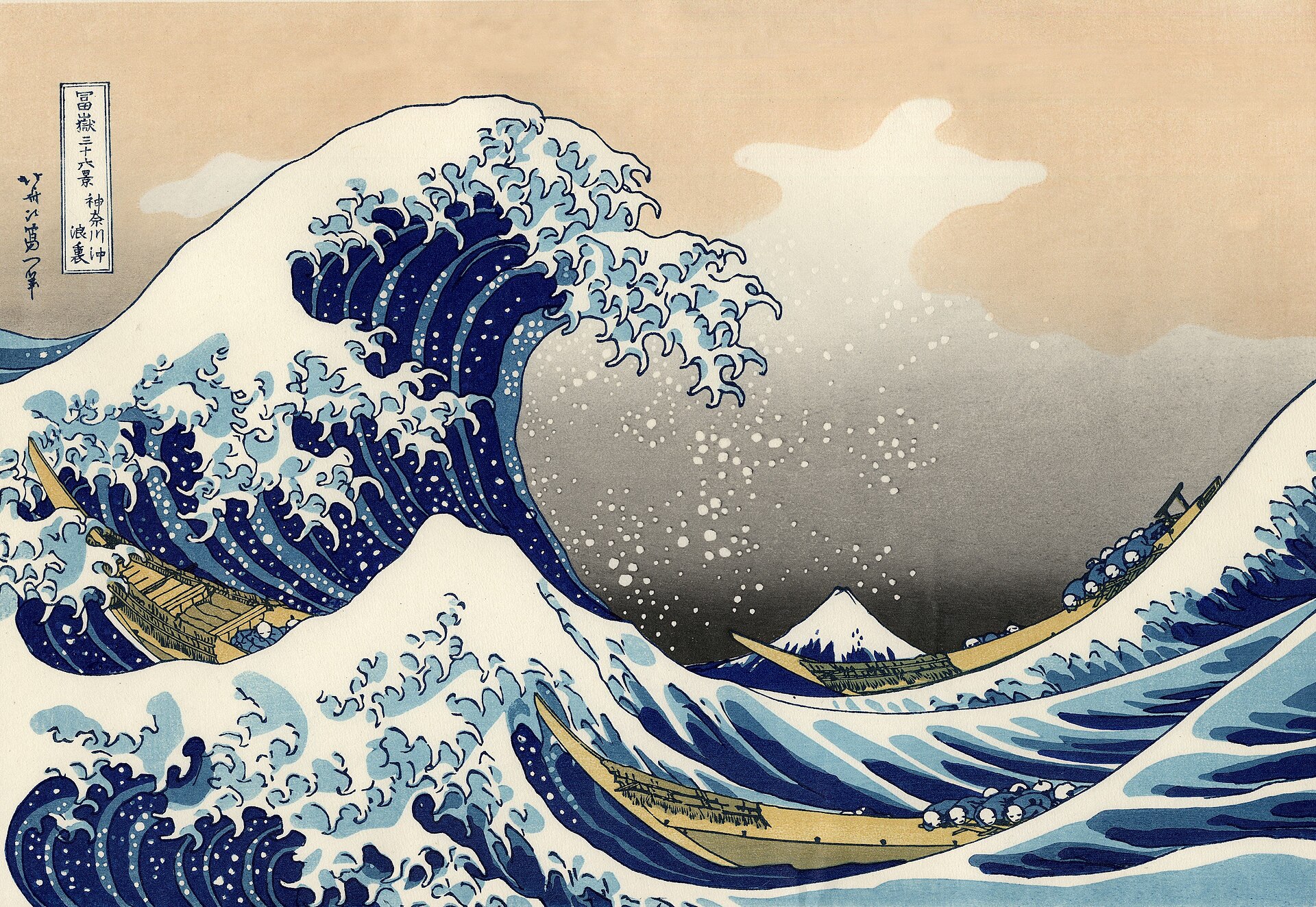
In one frozen second, the wave rises like a claw and the boats brace. You can almost feel the spray and the tension in the oars.
Designing a split second
Hokusai chooses the most dramatic moment: the crest just before impact. The foam fingers reach forward like claws, while the boats curl beneath in a tense arc.
The wave’s curve mirrors the curve of Mount Fuji. That visual rhyme gives the chaos a hidden order.
Fuji as anchor
The mountain appears tiny, almost fragile, yet it anchors the entire scene. Its calm triangle steadies the composition and turns the wave into a temporary storm.
By shrinking Fuji, Hokusai amplifies the wave’s power, making scale itself part of the story.
Print culture and audience
The print was part of the series Thirty-six Views of Mount Fuji, made for a broad public. New pigments like Prussian blue gave it depth and modernity.
Because it was a woodblock print, it could travel and be collected, which helped it become a global icon.
Legacy
The Great Wave influenced artists from Monet to Debussy. Its clarity makes it endlessly reproducible while still feeling powerful.
It remains a symbol of awe in the face of nature.
Looking closer
The boats are long and narrow, packed with rowers who lean forward in unison. Their scale makes the wave feel enormous, but their rhythm also suggests human resilience.
Hokusai’s foam curls like claws, yet the structure of the wave is clear and elegant. The fear comes from the subject, the beauty from the design.
Nature is vast, but the composition is perfectly controlled.