Northern Renaissance
The Garden of Earthly Delights
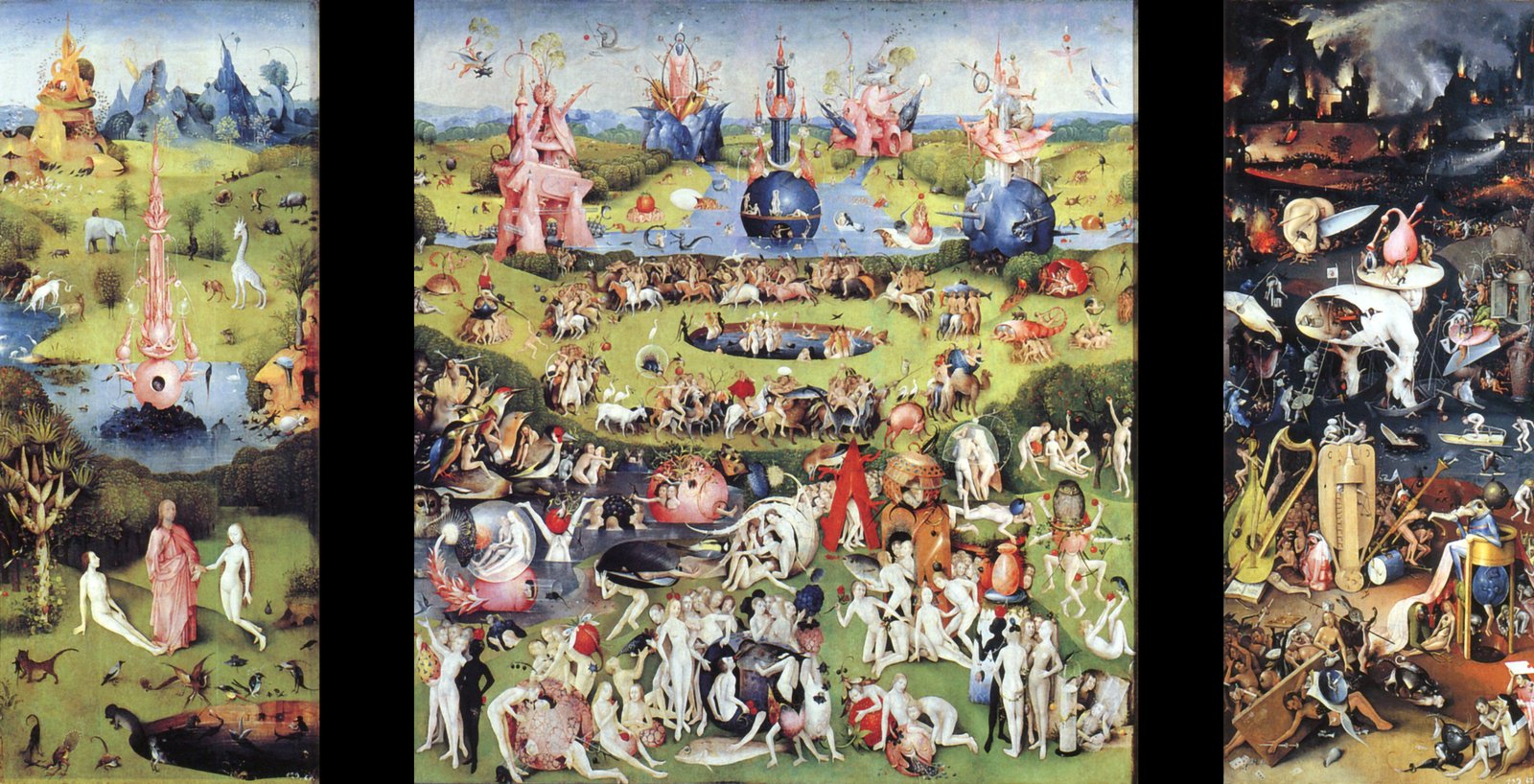
A triptych that moves from Eden to excess to ruin, painted as a dense moral dream.
Three worlds in one
The left panel shows Eden, the center bursts with earthly pleasures, and the right panel descends into a nightmarish hell.
Bosch connects them into a single story about desire, choice, and consequence.
A forest of symbols
Every creature and object feels purposeful, even when it looks fantastical. Birds, fruits, and strange hybrid beings act like visual metaphors.
The painting asks you to read it slowly, as if it were a text made of images.
Pleasure and warning
The middle panel is lively and almost joyful, but the right panel reveals the cost. Bosch does not condemn pleasure outright, but he frames it inside a moral arc.
The contrast between beauty and chaos gives the work its unsettling energy.
A timeless imagination
Bosch's imagery feels strangely modern, full of dream logic and surreal invention.
The Garden of Earthly Delights continues to invite endless interpretation because it refuses to explain itself fully.
Looking closer
Notice how the bright, almost playful colors of the middle panel make the later darkness feel more severe.
The right panel includes instruments of torture made from musical tools, turning beauty into unease.
Bosch paints a world that feels like a dream you can't fully translate.